Biomedical data science is a multidisciplinary field which leverages large volumes of data to promote biomedical innovation and discovery. Biomedical data science draws from various fields including Biostatistics, Biomedical informatics, and machine learning, with the goal of understanding biological and medical data. It can be viewed as the study and application of data science to solve biomedical problems. Modern biomedical datasets often have specific features which make their analyses difficult, including: Large numbers of feature (sometimes billions), typically far larger than the number of samples (typically tens or hundreds) Noisy and missing data Privacy concerns (e.g., electronic health record confidentiality) Requirement of interpretability from decision makers and regulatory bodies Many biomedical data science projects apply machine learning to such datasets. These characteristics, while also present in many data science applications more generally, make biomedical data science a specific field. Examples of biomedical data science research include: Computational genomics Computational imaging Electronic health records data mining Biomedical network science Clinical Natural Language Processing (NLP) == Computational Imaging and Deep Learning == Computational imaging is a cornerstone of biomedical data science, focusing on the development of algorithms to enhance, analyze, and interpret medical imagery. In recent years, the field has been transformed by the integration of deep learning, particularly through the use of Convolutional Neural Networks. Deep learning started from researchers manually defining characteristics like edge detection or texture representation learning. In a more modern approach of computational imaging, models automatically learn a hierarchy of features directly from raw pixel data. This overlap between data science and deep learning is applied across several key tasks: Classification: Identifying the presence of specific diseases, such as distinguishing between benign and malignant tumors in histopathology slides or detecting pneumonia in chest X-rays. Segmentation: The precise delineation of anatomical structures or lesions. A notable example is the U-Net architecture, which is widely used for biomedical image segmentation to help clinicians quantify organ volume or track tumor growth. Detection: Automating the localization of small objects, such as identifying microcalcifications in mammograms or polyps during colonoscopies. Registration: The process of aligning multiple images to provide a comprehensive view of the patient's anatomy. Even with all of these enhancements, the application of deep learning in medical imaging requires accomplishing vigorous challenges. An example of these changes is building large, annotated datasets and creating the imperative for model interpretability in clinical decision-making. == Electronic Health Records == Electronic Health Records (EHRs) are a digital alternative to patient paper charts, usually including individual records or population health information. EHRs can be used in a wide variety of applications, including research and analysation as they often include demographics, diagnoses, medications, test results, and personal statistics. === History === ==== 1960s ==== The earliest precursor is considered Dr. Lawrence Weed's problem-oriented medical record (POMR) published in the 1968 which sorts and groups medical records by medical diagnoses and symptoms. The POMR was the first system to organize based off of patient information rather than the source (doctors, nurses, attendings, etc.). In 1969, the Regenstrief Institute developed and published the Regenstrief Medical Record System which established electronic writing, storage, and retrieval of records which served as the basis for modern EHR systems. ==== 2000s ==== In 2009, the Health Information Technology for Economic and Clinical Health Act (HITECH Act) was passed in the United States. This act standardized privacy and distribution of EHRs and increased the acceptance and utilization of EHRs within medical and academic settings. == Artificial Intelligence and Machine Learning Applications == Machine Learning and Artificial Intelligence have become central tools in biomedical data science. Recent advances in large language models (LLMs) have expanded their role beyond text, with models trained directly on genomic sequences enabling tasks such as gene function prediction, variant effect analysis, and drug discovery. In clinical settings, Natural Language Processing (NLP) models are applied to electronic health records to extract structured insights from unstructured clinical notes and data, supporting diagnosis and treatment planning. Beyond genomics, AI models have been applied to protein structure prediction. AlphaFold, developed by Google DeepMind, uses deep learning to predict three-dimensional protein structures from amino acid sequences with high accuracy. These predictions have been used to support drug target identification and the study of disease mechanisms. == Knowledge Graphs == Knowledge graphs (KGs) are widely used in biomedical data science to represent and analyze complex relationships among biological and medical entities. By structuring data as nodes (e.g., genes, diseases, drugs) and edges (relationships), KGs enable computational methods to extract insights and support decision-making. These biomedical relationships can be efficiently modeled and queried using technologies such as Neo4j. === Biomedical Research Applications === KGs provide biomedical researchers with a way to model complex biological systems. They have been used to identify the relationships between diseases and biomolecules, support drug repurposing, and to uncover new biological insights. Additional applications include: Identification of novel antibiotic resistance genes through graph-based link prediction. Finding associations between miRNA and diseases. Prediction of protein-protein interactions. === Clinical Applications === In clinical settings, KGs can be used to make visual representations of a patient's electronic health records. The data obtained from these graphs can assist healthcare providers in improving patient diagnoses and prescribing more effective drugs. Additionally, embeddings derived from resources like the Unified Medical Language System (UMLS) enable natural language processing of clinical text and similarity analysis between medical concepts. === Limitations === Despite their advantages, knowledge graphs face several challenges. Some of these include: High algorithmic complexity and large biological datasets make the process computationally expensive. KG construction can be a time-consuming process that requires careful attention to assign appropriate node types and vocabularies. Using data from a wide range of datasets in one KG requires them to be effectively integrated. == Privacy == A primary challenge in biomedical data science is maintaining medical privacy. Conducting research requires that data be collected on a number of people for training and testing purposes and is stored within biomedical datasets. This poses a risk for violating patient confidentiality and may dissuade people from participating in studies. The main sources of health statistics are surveys administrative and medical records health care claims data, vital records surveillance disease registries grey literature and peer-reviewed literature. Large data collection is a useful tool for researching various medical conditions. Researchers use these large datasets of information to identify factors that may make people more susceptible to certain diseases. Large amounts of collected data can help researchers identify patterns for disease probabilities. The findings can show a person is more likely for a condition, or identify environmental, social, and personal habits that may lead to adverse health issues. Institutions researching using personal medical information come with a moral and legal responsibility to protect the use of that information. Protection of the collected information has become a big concern. Sophisticated and coordinated attacks on certain medical systems happen more frequently. Medical companies, medical insurance and private businesses have invested a great deal into the protection of personal data. Despite this, data breaches continue to be documented. The chart below shows the top healthcare breaches in 2025. For these reasons, many people have reservations about giving up their personal data. Aside from the legitimate use of personal data there have been instances where companies have found methods to profit from brokering medical information. Concerns exist regarding unauthorized use of sensitive information within these data companies. If a person is identified within a dataset, then sensitive data can be used to discriminate against them. For example, insurance companies may charge a hi
Text normalization
Text normalization is the process of transforming text into a single canonical form that it might not have had before. Normalizing text before storing or processing it allows for separation of concerns, since input is guaranteed to be consistent before operations are performed on it. Text normalization requires being aware of what type of text is to be normalized and how it is to be processed afterwards; there is no all-purpose normalization procedure. == Applications == Text normalization is frequently used when converting text to speech. Numbers, dates, acronyms, and abbreviations are non-standard "words" that need to be pronounced differently depending on context. For example: "$200" would be pronounced as "two hundred dollars" in English, but as "lua selau tālā" in Samoan. "vi" could be pronounced as "vie," "vee," or "the sixth" depending on the surrounding words. Text can also be normalized for storing and searching in a database. For instance, if a search for "resume" is to match the word "résumé," then the text would be normalized by removing diacritical marks; and if "john" is to match "John", the text would be converted to a single case. To prepare text for searching, it might also be stemmed (e.g. converting "flew" and "flying" both into "fly"), canonicalized (e.g. consistently using American or British English spelling), or have stop words removed. == Techniques == For simple, context-independent normalization, such as removing non-alphanumeric characters or diacritical marks, regular expressions would suffice. For example, the sed script sed ‑e "s/\s+/ /g" inputfile would normalize runs of whitespace characters into a single space. More complex normalization requires correspondingly complicated algorithms, including domain knowledge of the language and vocabulary being normalized. Among other approaches, text normalization has been modeled as a problem of tokenizing and tagging streams of text and as a special case of machine translation. == Textual scholarship == In the field of textual scholarship and the editing of historic texts, the term "normalization" implies a degree of modernization and standardization – for example in the extension of scribal abbreviations and the transliteration of the archaic glyphs typically found in manuscript and early printed sources. A normalized edition is therefore distinguished from a diplomatic edition (or semi-diplomatic edition), in which some attempt is made to preserve these features. The aim is to strike an appropriate balance between, on the one hand, rigorous fidelity to the source text (including, for example, the preservation of enigmatic and ambiguous elements); and, on the other, producing a new text that will be comprehensible and accessible to the modern reader. The extent of normalization is therefore at the discretion of the editor, and will vary. Some editors, for example, choose to modernize archaic spellings and punctuation, but others do not. An edition of a text might be normalized based on internal criteria, where orthography is standardized according to the language of the original, or external criteria, where the norms of a different time period are applied. For an example of the latter, a published edition of a medieval Icelandic manuscript might be normalized to the conventions of modern Icelandic, or it might be normalized to Classical Old Icelandic. Standards of normalization vary based on language of the edition as well as the specific conventions of the publisher.
Embodied cognition
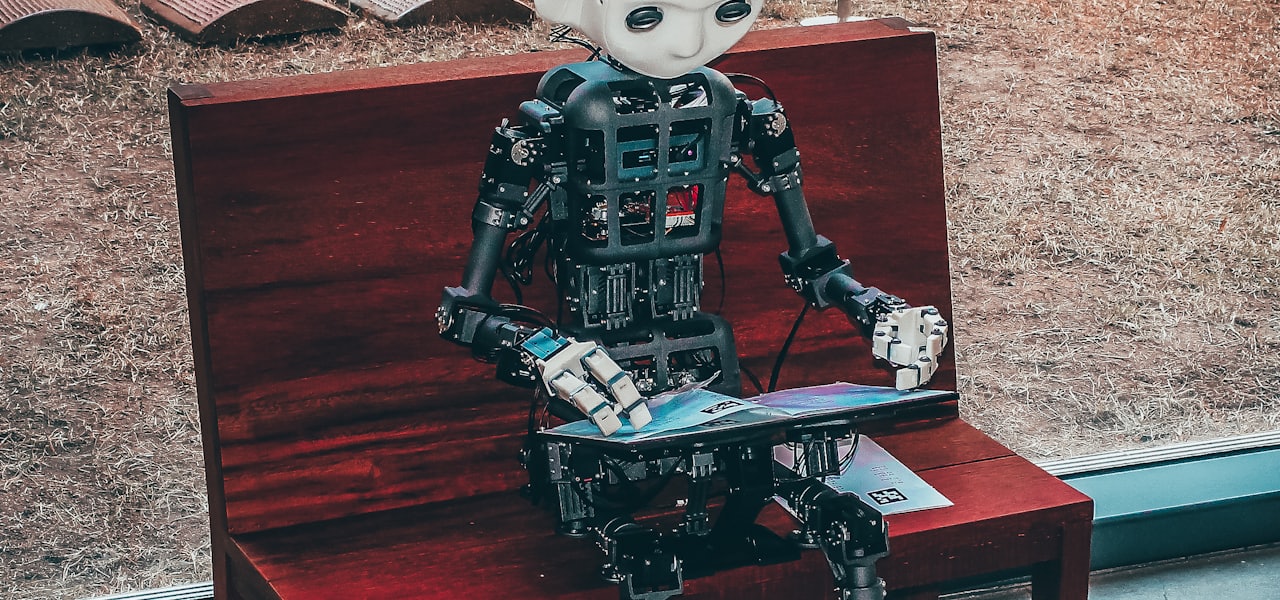
Embodied cognition represents a diverse group of theories which investigate how cognition is shaped by the bodily state and capacities of the organism. These embodied factors include the motor system, the perceptual system, bodily interactions with the environment (situatedness), and the assumptions about the world that shape the functional structure of the brain and body of the organism. Embodied cognition suggests that these elements are essential to a wide spectrum of cognitive functions, such as perception biases, memory recall, comprehension and high-level mental constructs (such as meaning attribution and categories) and performance on various cognitive tasks (reasoning or judgment). The embodied mind thesis challenges other theories, such as cognitivism, computationalism, and Cartesian dualism. It is closely related to the extended mind thesis, situated cognition, and enactivism. The modern version depends on understandings drawn from up-to-date research in psychology, linguistics, cognitive science, dynamical systems, artificial intelligence, robotics, animal cognition, plant cognition, and neurobiology. == Theory == Proponents of the embodied cognition thesis emphasize the active and significant role the body plays in the shaping of cognition and in the understanding of an agent's mind and cognitive capacities. In philosophy, embodied cognition holds that an agent's cognition, rather than being the product of mere (innate) abstract representations of the world, is strongly influenced by aspects of an agent's body beyond the brain itself. An embodied model of cognition opposes the disembodied Cartesian model, according to which all mental phenomena are non-physical and, therefore, not influenced by the body. With this opposition the embodiment thesis intends to reintroduce an agent's bodily experiences into any account of cognition. It is a rather broad thesis and encompasses both weak and strong variants of embodiment. In an attempt to reconcile cognitive science with human experience, the enactive approach to cognition defines "embodiment" as follows: By using the term embodied we mean to highlight two points: first that cognition depends upon the kinds of experience that come from having a body with various sensorimotor capacities, and second, that these individual sensorimotor capacities are themselves embedded in a more encompassing biological, psychological and cultural context. This double sense attributed to the embodiment thesis emphasizes the many aspects of cognition that researchers in different fields—such as philosophy, cognitive science, artificial intelligence, psychology, and neuroscience—are involved with. This general characterization of embodiment faces some difficulties: a consequence of this emphasis on the body, experience, culture, context, and the cognitive mechanisms of an agent in the world is that often distinct views and approaches to embodied cognition overlap. The theses of extended cognition and situated cognition, for example, are usually intertwined and not always carefully separated. And since each of the aspects of the embodiment thesis is endorsed to different degrees, embodied cognition should be better seen "as a research program rather than a well-defined unified theory". Some authors explain the embodiment thesis by arguing that cognition depends on an agent's body and its interactions with a determined environment. From this perspective, cognition in real biological systems is not an end in itself; it is constrained by the system's goals and capacities. Such constraints do not mean cognition is set by adaptive behavior (or autopoiesis) alone, but instead that cognition requires "some kind of information processing... the transformation or communication of incoming information". The acquiring of such information involves the agent's "exploration and modification of the environment". It would be a mistake, however, to suppose that cognition consists simply of building maximally accurate representations of input information...the gaining of knowledge is a stepping stone to achieving the more immediate goal of guiding behavior in response to the system's changing surroundings. Another approach to understanding embodied cognition comes from a narrower characterization of the embodiment thesis. The following narrower view of embodiment avoids any compromises to external sources other than the body and allows differentiating between embodied cognition, extended cognition, and situated cognition. Thus, the embodiment thesis can be specified as follows: Many features of cognition are embodied in that they are deeply dependent upon characteristics of the physical body of an agent, such that the agent's beyond-the-brain body plays a significant causal role, or a physically constitutive role, in that agent's cognitive processing. This thesis points out the core idea that an agent's body plays a significant role in shaping different features of cognition, such as perception, attention, memory, reasoning—among others. Likewise, these features of cognition depend on the kind of body an agent has. The thesis omits direct mention of some aspects of the "more encompassing biological, psychological and cultural context" included in the enactive definition, making it possible to separate embodied cognition, extended cognition, and situated cognition. In contrast to the embodiment thesis, the extended mind thesis limits cognitive processing neither to the brain nor even to the body, it extends it outward into the agent's world. Situated cognition emphasizes that this extension is not just a matter of including resources outside the head but stressing the role of probing and changing interactions with the agent's world. Cognition is situated in that it is inherently dependent upon the cultural and social contexts within which it takes place. This conceptual reframing of cognition as an activity influenced by the body has had significant implications. For instance, the view of cognition inherited by most contemporary cognitive neuroscience is internalist in nature. An agent's behavior along with its capacity to maintain (accurate) representations of the surrounding environment were considered as the product of "powerful brains that can maintain the world models and devise plans". From this perspective, cognizing was conceived as something that an isolated brain did. In contrast, accepting the role the body plays during cognitive processes allows us to account for a more encompassing view of cognition. This shift in perspective within neuroscience suggests that successful behavior in real-world scenarios demands the integration of several sensorimotor and cognitive (as well as affective) capacities of an agent. Thus, cognition emerges in the relationship between an agent and the affordances provided by the environment rather than in the brain alone. In 2002, a collection of positive characterizations summarizing what the embodiment thesis entails for cognition were offered. Professor of Cognitive Psychology Margaret Wilson argues that the general outlook of embodied cognition "displays an interesting co-variation of multiple observations and houses a number of different claims: (1) cognition is situated; (2) cognition is time-pressured; (3) we off-load cognitive work onto the environment; (4) the environment is part of the cognitive system; (5) cognition is for action; (6) offline cognition is bodily-based". According to Wilson, the first three and the fifth claim appear to be at least partially true, while the fourth claim is deeply problematic in that all things that have an impact on the elements of a system are not necessarily considered part of the system. The sixth claim has received the least attention in the literature on embodied cognition, yet it might be the most significant of the six claims as it shows how certain human cognitive capabilities, that previously were thought to be highly abstract, now appear to be leaning towards an embodied approach for their explanation. Wilson also describes at least five main (abstract) categories that combine both sensory and motor skills (or sensorimotor functions). The first three are working memory, episodic memory, and implicit memory; the fourth is mental imagery, and finally, the fifth concerns reasoning and problem solving. == History == The theory of embodied cognition, along with the multiple aspects it comprises, can be regarded as the imminent result of an intellectual skepticism towards the flourishment of the disembodied theory of mind put forth by René Descartes in the 17th century. According to Cartesian dualism, the mind is entirely distinct from the body and can be successfully explained and understood without reference to the body or to its processes. Research has been done to identify the set of ideas that would establish what could be considered as the early stages of embodied cognition around inquiries regarding the mind-body-soul rel
Historical Thesaurus of English
The Historical Thesaurus of English (HTE) is the largest thesaurus in the world. It is called a historical thesaurus as it arranges the whole vocabulary of English, from the earliest written records in Old English to the present, according to the first documented occurrence of a word in the entire history of the English language. The HTE was conceived and begun in 1965 by the English Language & Linguistics department of the University of Glasgow, who have ever since continued to compile the thesaurus. From the 1980s onwards the project was moved from paper-based records to a computer database. Today, the HTE is available to the public online, but a print version, the Historical Thesaurus of the Oxford English Dictionary (HTOED), was published in 2009. == Main project: The Historical Thesaurus of English (HTE) == The Historical Thesaurus of English (HTE) is a complete database of all the words in the Oxford English Dictionary and other dictionaries (including Old English), arranged by semantic field and date. In this way, the HTE arranges the whole vocabulary of English, from the earliest written records in Old English to the present, alongside dates of use. It is the first historical thesaurus to be compiled for any of the world's languages and contains 800,000 meanings for 600,000 words, within 230,000 categories. As the HTE website states, "in addition to providing hitherto unavailable information for linguistic and textual scholars, the Historical Thesaurus online is a rich resource for students of social and cultural history, showing how concepts developed through the words that refer to them." === Structure === The work is divided into three main sections: the External World, the Mind, and Society. These are broken down into successively narrower domains. The text eventually discriminates more than 236,000 categories. The second order categories are: === History === The ambitious project was announced at a 1965 meeting of the Philological Society by its originator, Michael Samuels. Work on the HTE started in the same year. In 2017, the University of Glasgow was awarded the Queen's Anniversary Prize for Higher Education for the HTE. A second edition of the online HTE is currently in progress and is expected to be launched in late 2020. Work is released on the freely-available HTE website when available. == Print edition: Historical Thesaurus of the Oxford English Dictionary (HTOED) == On 22 October 2009, after 44 years of work, version 1.0 of the HTE was published by Oxford University Press in a two-volume slipcased set as the Historical Thesaurus of the Oxford English Dictionary (HTOED). The two hardcover volumes together total nearly 4,500 pages.
Demis Hassabis
Sir Demis Hassabis (/ˈdɛ.mɪs/ DE-mis /hɑːˈsɑː.bis/ hah-SAH-bees; born Dimitrios Hassapis, Greek: Δημήτριος Χασάπης, 27 July 1976) is a British artificial intelligence (AI) researcher and entrepreneur. He is the chief executive officer and co-founder of Google DeepMind and Isomorphic Labs, and a UK Government AI Adviser. In 2024, Hassabis and John M. Jumper were jointly awarded the Nobel Prize in Chemistry for their AI research contributions to protein structure prediction. Hassabis is a Fellow of the Royal Society and has won awards for his research efforts, including the Breakthrough Prize, the Canada Gairdner International Award and the Lasker Award. He was appointed a CBE in 2017, and knighted in 2024 for his work on AI. He was also listed among the Time 100 most influential people in the world in 2017 and 2025, and was one of the "Architects of AI" collectively chosen as Time's 2025 Person of the Year. == Early life and education == Hassabis was born to Costas and Angela Hassapis. His father is a Greek Cypriot and his mother is a Chinese Singaporean. Demis grew up in North London. His original surname was "Hassapis" (Greek: Χασάπης), meaning "butcher" in Greek, but he later, according to Ingo Althöfer, "executed a point mutation by changing ‘p’ to ‘b’". One of his younger brothers still carries the original surname. In his early career, he was a video game AI programmer and designer, and an expert board games player. A child prodigy in chess from the age of four, when he first learnt chess by watching his father playing against his uncle, Hassabis reached master standard at the age of 13 with an Elo rating of 2300 and captained many of the England junior chess teams. He represented the University of Cambridge in the Oxford–Cambridge varsity chess matches of 1995, 1996 and 1997, winning a half blue. He first got interested in technology after buying his first computer in 1984, a ZX Spectrum 48K, funded from chess winnings. He taught himself how to program from books. He subsequently wrote his first AI program on a Commodore Amiga to play the reversi board game. Between 1988 and 1990, Hassabis was educated at Queen Elizabeth's School, Barnet, a boys' grammar school in North London. He was subsequently home-schooled by his parents for a year, before studying at the comprehensive school of Christ's College in East Finchley. He completed his A-level exams two years early at 16. === Bullfrog Productions === Asked by Cambridge University to take a gap year owing to his young age, Hassabis began his computer games career at Bullfrog Productions after entering an Amiga Power "Win-a-job-at-Bullfrog" competition. He began by playtesting on Syndicate and then at 17 co-designing and lead-programming on the 1994 game Theme Park, with the game's designer Peter Molyneux. Theme Park, a simulation video game, sold several million copies and inspired a whole genre of simulation sandbox games. Despite being offered a seven-figure sum to remain in the games industry, he turned it down. He earned enough from his gap year to pay his own way through university. === University of Cambridge === Hassabis left Bullfrog to study at Queens' College of the University of Cambridge, where he completed the Computer Science Tripos and graduated in 1997 with a double first. == Career and research == === Lionhead === After graduating from Cambridge, Hassabis worked at Lionhead Studios. Games designer Peter Molyneux, with whom Hassabis had worked at Bullfrog Productions, had recently founded the company. At Lionhead, Hassabis worked as lead AI programmer on the 2001 god game Black & White. === Elixir Studios === Hassabis left Lionhead in 1998 to found Elixir Studios, a London-based independent games developer, signing publishing deals with Eidos Interactive, Vivendi Universal and Microsoft. In addition to managing the company, Hassabis served as executive designer of the games Republic: The Revolution and Evil Genius. Each received BAFTA nominations for their interactive music scores, created by James Hannigan. The release of Elixir's first game, Republic: The Revolution, a highly ambitious and unusual political simulation game, was delayed due to its huge scope, which involved an AI simulation of the workings of an entire fictional country. The final game was reduced from its original vision and greeted with lukewarm reviews, receiving a Metacritic score of 62/100. Evil Genius, a tongue-in-cheek Austin Powers parody, fared much better with a score of 75/100. In April 2005 the intellectual property and technology rights were sold to various publishers and the studio was closed. === Neuroscience research === Following Elixir Studios, Hassabis returned to academia to obtain his PhD in cognitive neuroscience from UCL Queen Square Institute of Neurology in 2009 supervised by Eleanor Maguire. He sought to find inspiration in the human brain for new AI algorithms. He continued his neuroscience and artificial intelligence research as a visiting scientist jointly at Massachusetts Institute of Technology (MIT), in the lab of Tomaso Poggio, and Harvard University, before earning a Henry Wellcome postdoctoral research fellowship to the Gatsby Computational Neuroscience Unit at UCL in 2009 working with Peter Dayan. Working in the field of imagination, memory, and amnesia, he co-authored several influential papers published in Nature, Science, Neuron, and PNAS. His very first academic work, published in PNAS, was a landmark paper that showed systematically for the first time that patients with damage to their hippocampus, known to cause amnesia, were also unable to imagine themselves in new experiences. The finding established a link between the constructive process of imagination and the reconstructive process of episodic memory recall. Based on this work and a follow-up functional magnetic resonance imaging (fMRI) study, Hassabis developed a new theoretical account of the episodic memory system identifying scene construction, the generation and online maintenance of a complex and coherent scene, as a key process underlying both memory recall and imagination. This work received widespread coverage in the mainstream media and was listed in the top 10 scientific breakthroughs of the year by the journal Science. He later generalised these ideas to advance the notion of a 'simulation engine of the mind' whose role it was to imagine events and scenarios to aid with better planning. === DeepMind === Hassabis is the CEO and co-founder of DeepMind, a machine learning AI startup, founded in London in 2010 with Shane Legg and Mustafa Suleyman. Hassabis met Legg when both were postdocs at the Gatsby Computational Neuroscience Unit, and he and Suleyman had been friends through family. Hassabis also recruited his university friend and Elixir partner David Silver. DeepMind's mission is to "solve intelligence" and then use intelligence "to solve everything else". More concretely, DeepMind aims to combine insights from systems neuroscience with new developments in machine learning and computing hardware to unlock increasingly powerful general-purpose learning algorithms that will work towards the creation of an artificial general intelligence (AGI). The company has focused on training learning algorithms to master games, and in December 2013 it announced that it had made a pioneering breakthrough by training an algorithm called a Deep Q-Network (DQN) to play Atari games at a superhuman level by using only the raw pixels on the screen as inputs. DeepMind's early investors included several high-profile tech entrepreneurs. In 2014, Google purchased DeepMind for £400 million. Although most of the company has remained an independent entity based in London, DeepMind Health has since been directly incorporated into Google Health. Since the Google acquisition, the company has notched up a number of significant achievements, perhaps the most notable being the creation of AlphaGo, a program that defeated world champion Lee Sedol at the complex game of Go. Go had been considered a holy grail of AI, for its high number of possible board positions and resistance to existing programming techniques. However, AlphaGo beat European champion Fan Hui 5–0 in October 2015 before winning 4–1 against former world champion Lee Sedol in March 2016 and winning 3–0 against the world's top-ranked player Ke Jie in 2017. Additional DeepMind accomplishments include creating a neural Turing machine, reducing the energy used by the cooling systems in Google's data centres by 40%, and advancing research on AI safety. DeepMind has also been responsible for technical advances in machine learning, having produced a number of award-winning papers. In particular, the company has made significant advances in deep learning and reinforcement learning, and pioneered the field of deep reinforcement learning which combines these two methods. Hassabis has predicted that artificial intelligence will be "one of the most beneficial techn
Sprayprinter
SprayPrinter is a device that attaches to aerosol paint cans whereby users can print images via Bluetooth from a smartphone onto a wall or almost any surface. == History == The technology behind SprayPrinter was developed by Mihkel Joala. He explained in a 2016 interview with New Atlas that his idea was inspired by the modern car engine and the Nintendo Wii console. "Engines nowadays use extremely fast valves to spray fuel to [the] combustion chamber," says Joala. "I realized I can use them to shoot paint with pinpoint accuracy." As of December 2021, the company appears to be no longer selling products. == Awards and Recognitions == In 2015, SprayPrinter received €8,000 from the Estonian prototyping contest Prototron for its initial prototype. In 2016, the SprayPrinter team won the grand prize of €30,000 from the televised pitching competition Ajujaht.
Personal knowledge base
A personal knowledge base (PKB) is an electronic tool used by an individual to express, capture, and later retrieve personal knowledge. It differs from a traditional database in that it contains subjective material particular to the owner, that others may not agree with nor care about. Importantly, a PKB consists primarily of knowledge, rather than information; in other words, it is not a collection of documents or other sources an individual has encountered, but rather an expression of the distilled knowledge the owner has extracted from those sources or from elsewhere. The term personal knowledge base was mentioned as early as the 1980s, but the term came to prominence in the 2000s when it was described at length in publications by computer scientist Stephen Davies and colleagues, who compared PKBs on a number of different dimensions, the most important of which is the data model that each PKB uses to organize knowledge. == Data models == Davies and colleagues examined three aspects of the data models of PKBs: their structural framework, which prescribes rules about how knowledge elements can be structured and interrelated (as a tree, graph, tree plus graph, spatially, categorically, as n-ary links, chronologically, or ZigZag); their knowledge elements, or basic building blocks of information that a user creates and works with, and the level of granularity of those knowledge elements (such as word/concept, phrase/proposition, free text notes, links to information sources, or composite); and their schema, which involves the level of formal semantics introduced into the data model (such as a type system and related schemas, keywords, attribute–value pairs, etc.). Davies and colleagues also emphasized the principle of transclusion, "the ability to view the same knowledge element (not a copy) in multiple contexts", which they considered to be "pivotal" to an ideal PKB. They concluded, after reviewing many design goals, that the ideal PKB was still to come in the future. === Personal knowledge graph === In their publications on PKBs, Davies and colleagues discussed knowledge graphs as they were implemented in some software of the time. Later, other writers used the term personal knowledge graph (PKG) to refer to a PKB featuring a graph structure and graph visualization. However, the term personal knowledge graph is also used by software engineers to refer to the different subject of a knowledge graph about a person, in contrast to a knowledge graph created by a person in a PKB. == Software architecture == Davies and colleagues also differentiated PKBs according to their software architecture: file-based, database-based, or client–server systems (including Internet-based systems accessed through desktop computers and/or handheld mobile devices). == History == Non-electronic personal knowledge bases have probably existed in some form for centuries: Leonardo da Vinci's journals and notes are a famous example of the use of notebooks. Commonplace books, florilegia, annotated private libraries, and card files (in German, Zettelkästen) of index cards and edge-notched cards are examples of formats that have served this function in the pre-electronic age. Undoubtedly the most famous early formulation of an electronic PKB was Vannevar Bush's description of the "memex" in 1945. In a 1962 technical report, human–computer interaction pioneer Douglas Engelbart (who would later become famous for his 1968 "Mother of All Demos" that demonstrated almost all the fundamental elements of modern personal computing) described his use of edge-notched cards to partially model Bush's memex. == Examples == The following software applications have been used to build PKBs using various data models and architectures. The list includes software mentioned by Davies and colleagues in their 2005 paper, and additional software. Open source Compendium Haystack (MIT project) Joplin Logseq NoteCards Org-mode QOwnNotes TiddlyWiki Closed source Evernote Microsoft OneNote MindManager MyLifeBits Notion Obsidian Personal Knowbase PersonalBrain Roam Tinderbox